
What to Ask Before You Book a Mobile Tire Call
When you're choosing Ace's Mobile Tire Services, the questions to ask before you decide are mostly practical: can they come to where you actually are, can they fix the tire or does it need replacing, and what do you need to have ready when they arrive. A mobile tire appointment is different from driving to a shop — the technician comes to you, so a few quick questions up front save everyone time.
Start with location. Mobile tire work is distance-limited by nature, so it's worth confirming the call-out covers your spot before you wait on it. If you're near Lewis Center, the Lewis Center mobile tire service page lays out what's available in that area, and the Columbus mobile tire page does the same for Columbus.
After location, the next thing worth asking is simply what's wrong with the tire in plain terms — a flat that happened suddenly, a slow leak you've been topping up for weeks, or a tire that's just old and worn out. Describing the symptom clearly when you first call means whoever answers can tell you roughly what to expect, rather than guessing until someone's standing next to the car. If you noticed the tire losing air gradually rather than all at once, mention that too — it's a different problem than a sudden puncture and can change what the technician brings along.
Is It a Repair or a Replacement?
This is the question most people don't think to ask until the technician is standing next to the car. A puncture in the tread can often be repaired. A sidewall puncture, a tire that's already worn past a safe depth, or damage from hitting a curb usually can't be — it needs replacing instead. Knowing this ahead of time means you're not caught off guard by the recommendation once someone's looked at the tire in person.
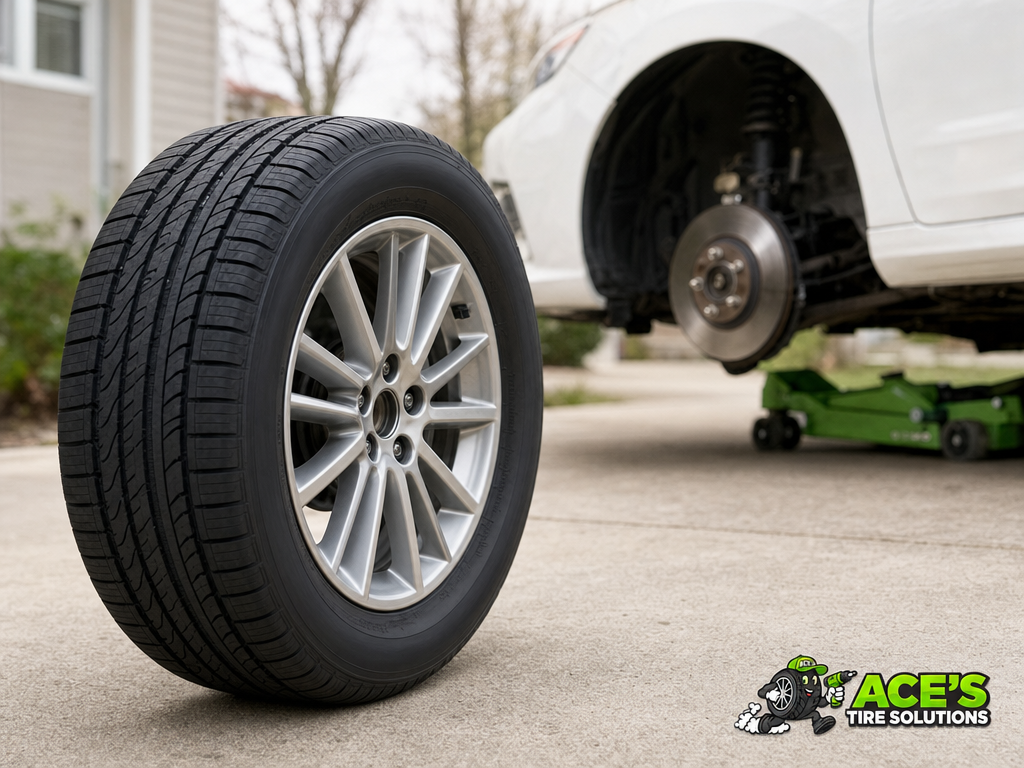
A useful way to think about it: the tread is the part of the tire built to take small punctures and still be patched safely. The sidewall isn't — it flexes constantly as the tire rolls, and a repair there doesn't hold up the same way, which is why it's treated differently even if the hole looks similar in size. Tread depth matters too. A tire that's already close to the legal wear limit may not be worth repairing even if the puncture itself is fixable, because the rest of the tire is nearing the end of its life anyway.
It also helps to ask what happens if the technician gets out there and finds the damage is worse than it sounded on the phone — for example, a tire that looked like a simple nail puncture but turns out to have a sidewall crack from the same impact. Asking this upfront means there's no surprise about next steps if the diagnosis changes once the tire's actually off the ground.
If you want a deeper walkthrough of how that repair-versus-replace call gets made, the site's existing guide to tire repair questions goes through it in more detail.
What Do You Need to Have Ready?
A mobile technician needs safe, flat, reasonably level ground to work on — a driveway, a parking lot, the shoulder of a road if it's wide and safe enough. It helps to know roughly where your spare is and whether your vehicle has one at all, since newer cars increasingly don't. If you're at work or somewhere with restricted access, it's worth mentioning that when you first make contact, so the visit isn't held up at the gate.
It's also worth having your keys and vehicle easily accessible before the technician arrives, rather than parked somewhere you'd need to retrieve them from. If the car is in a garage or tight space, think about whether there's enough room around the tire for someone to work safely — mobile tire work still needs a bit of clearance on at least one side of the vehicle. And if you're not going to be the one present when the technician arrives, let whoever's handling it know what's wrong with the tire and where the spare is, so they're not starting from zero.
One more thing worth checking before the appointment: if your vehicle has a tire pressure monitoring system or a locking wheel nut, mention it when you book. It's not something every car has, but when it applies, it's easier for everyone if the technician knows in advance rather than discovering it on site.
What Happens After the Visit
Once the tire's handled, ask what to watch for afterward — most people want to know whether it's fine to drive normally right away or whether there's anything to keep an eye on over the next day or two. This is a reasonable thing to ask any tire technician, mobile or otherwise, and a straight answer to it is a decent sign you're dealing with someone who knows the work.
It's also fair to ask whether the spare — if one was used — is meant to get you home or whether it's rated for longer, everyday driving. Not all spares are the same, and the answer changes what you do next: some are a short-term fix meant to get you to a shop, others are a full working tire. If a repair was done rather than a replacement, it's reasonable to ask how to tell if something's wrong later on, so you know what a problem looks like if one comes up.
If you've got a tire question or need a mobile call-out, contact Aces Mobile Tires and describe where you are and what's wrong — they'll tell you straight away whether it's a repair, a replacement, or something to keep an eye on.