
The Four Questions That Actually Matter
A flat tire rarely happens at a convenient time, and the first shop that picks up the phone isn't always the right one for the job. Before you decide who repairs your tire, ask four things: can it actually be fixed, will they come to you, what will it cost, and can they help if it happens after hours or somewhere awkward. Get straight answers to those and the rest of the decision is easy.
Is the Tire Repairable, or Does It Need to Be Replaced?
Not every flat can be patched, and a shop worth using will tell you that honestly instead of repairing something that shouldn't be repaired. As a general rule, a small puncture in the tread area can often be fixed. Damage to the sidewall, a puncture near the edge of the tread, or a tire that's already worn down or has been plugged before usually means replacement is the safer call, not another patch.
Picture two flats side by side. One has a quarter-inch puncture dead center in the tread, and the tire is otherwise in decent shape — that's the kind of damage a technician can usually repair. The other has a puncture an inch from the sidewall, or the tire already has an old plug in it from a previous fix. That second tire is a better candidate for replacement, even though the hole might look similar at a glance. The difference isn't just the size of the hole — it's where it sits and what the tire has already been through. Ask whoever you call how they decide, not just whether they can fix it.
Plug, Patch, or Both — Why the Repair Method Matters
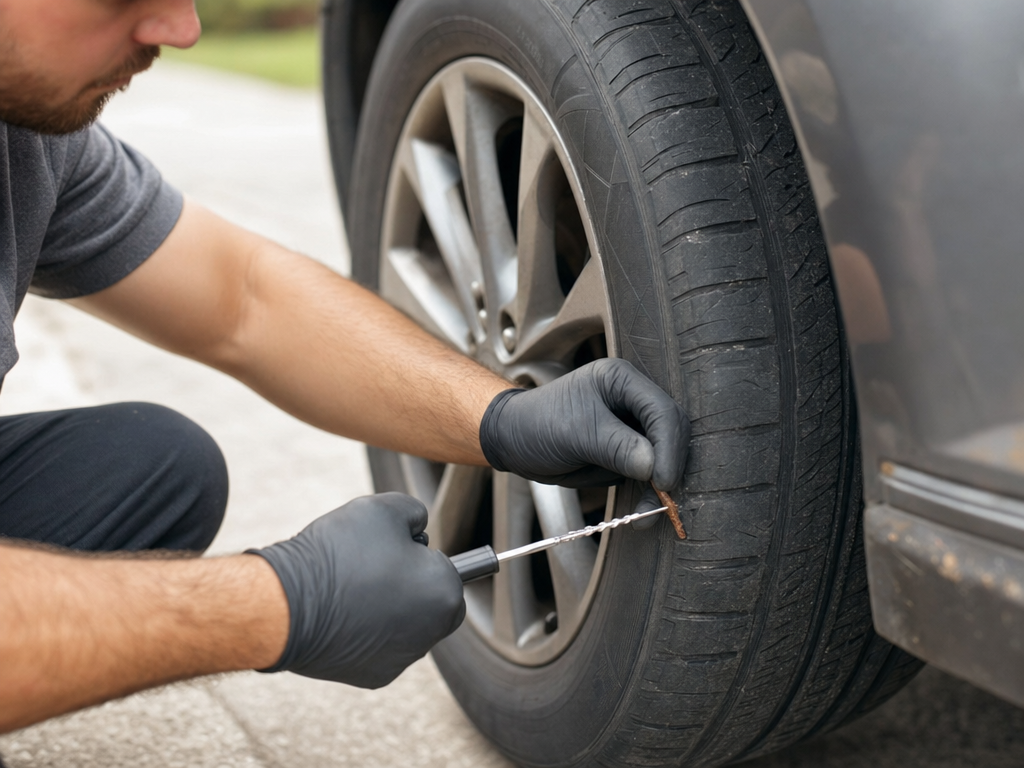
Not all tire repairs are done the same way, and it's worth asking which method a shop plans to use before they start. A plug alone — a sticky, rope-style insert pushed in from the outside — is quick, but it only fills the hole without sealing the inner liner of the tire. A patch applied from the inside, or a combined patch-plug repair, seals both the puncture and the liner, which is generally considered the more complete repair. If a shop glosses over this question or seems to be rushing to the cheapest, fastest fix, it's fair to ask why before you agree to it.
Will They Come to You, or Do You Have to Go to Them?
If you're at work, at home, or stuck on the side of the road, driving on a flat (or a spare you're not sure about) to a shop isn't always realistic. Aces Mobile Tires brings the repair to wherever your vehicle is, rather than asking you to bring the vehicle to a shop. If you're weighing a traditional shop against a service that comes to you, it's worth reading through how mobile tire repair works before you decide which fits your situation.
What Will It Cost, and Is the Price Clear Before Work Starts?
Cost depends on things like the tire size, where the puncture is, and whether the job is straightforward or complicated. A shop that gives you a clear answer before they start work — not a vague 'it depends' with no follow-up — is one you can trust not to surprise you with the final bill. If you're in the Columbus area and want a sense of what to expect, Aces Mobile Tires' cost page for Columbus, Ohio walks through what affects the price.
What Happens If It's an Emergency or After Normal Hours?
Flats don't wait for business hours, and a tire problem on a highway shoulder is a different situation than one in your own driveway. Before you commit to a shop, ask directly whether they handle roadside situations and whether they can respond outside a typical nine-to-five — and whether 'emergency' means roadside calls only, or after-hours calls at home too. Aces Mobile Tires' emergency tire service page explains what that looks like if you're dealing with a flat right now rather than planning ahead.
Do They Actually Serve Your Area?
A mobile tire service is only useful if it reaches where you are. Aces Mobile Tires works in Columbus, Ohio, along with surrounding communities including Lewis Center and New Albany. If you're outside Columbus proper, it's worth confirming coverage for your specific location before you assume a mobile repair is an option — distance and timing can affect what's realistic on short notice.
What to Have Ready Before You Call
A few details speed things up once you've decided who to call. Know which tire is affected — driver's side or passenger side, front or back — since that helps a technician come prepared. Check whether the vehicle is safe to drive at all, even slowly, because that affects whether someone needs to reach you right away or whether it can wait a bit. If you can see it, have the tire size on hand — it's printed on the sidewall as a string of numbers and letters, something like 225/60R16. And know roughly where you are, whether that's a cross street, a parking lot, or a home address, since that's what determines how quickly a mobile technician can actually get to you. None of this is complicated, but having it ready cuts down on back-and-forth when you're standing next to a flat tire wondering what to do next.
A Short Checklist Before You Call
Can the tire be repaired, or does it need replacing? Does the company come to your location? Do they explain which repair method they'll use? Will they tell you the cost before starting? Can they help outside normal hours if needed? Do they actually cover your area? Ask these six things and you'll know quickly whether you're talking to the right shop for your situation.
Questions and answers
Can a tire with a nail in it always be repaired?
Not always. It generally depends on where the puncture is and how big it is. A small puncture in the tread area is often repairable, but damage to the sidewall or a tire that's already been repaired before usually means it needs to be replaced instead.
Does it matter if a shop uses a plug instead of a patch?
It can. A plug alone fills the outside of the hole but doesn't seal the inner liner of the tire. A patch, or a combined patch-plug repair done from the inside, is generally considered the more complete fix. It's a reasonable question to ask before a repair starts.
Do I need to bring my car to a shop for tire repair?
Not necessarily. Aces Mobile Tires offers mobile tire repair, which means the technician comes to your vehicle's location instead of you having to drive it somewhere, which matters if the tire isn't safe to drive on.
What if my tire goes flat outside of normal business hours?
Ask any shop you're considering whether they handle after-hours or roadside situations before you need one. Aces Mobile Tires' emergency tire service page covers what to expect in that kind of situation.
If you've got a flat and want straight answers to these questions, contact Aces Mobile Tires to ask about repair, cost, and whether mobile service can reach you today.